Order Your
Copy Today
Create Scale Without Chaos For Leaders.
Practical, fast, low-risk improvements.
"We are what we repeatedly do. Excellence then, is not an act but a habit."
[Aristotle]
Growing Pains & The Growth Cliff
Process Architecture
Minimum Viable Process
First Five Processes
Roll-Out Plan
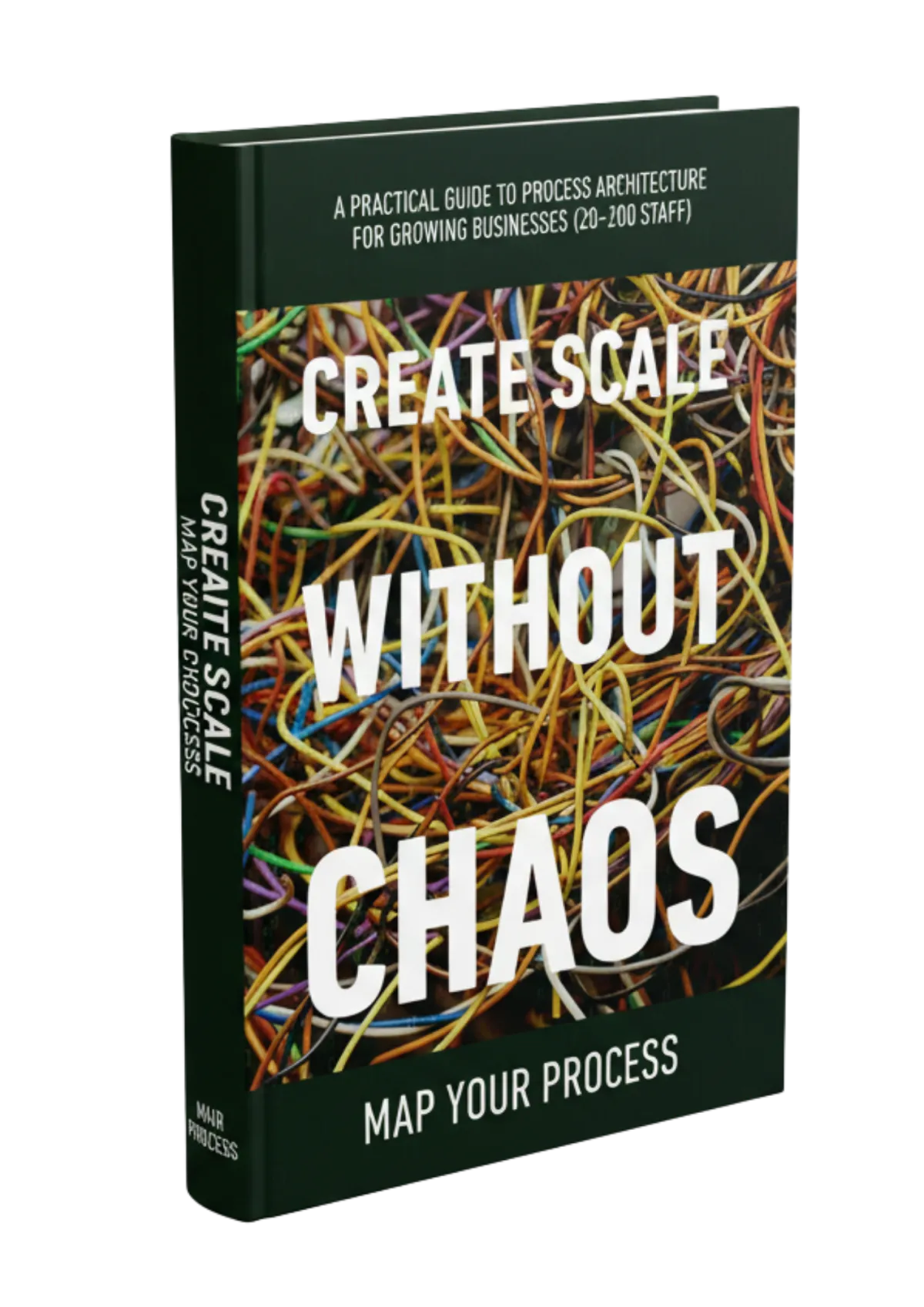
Take A Look Inside...

Scaling Sounds Exciting Until It Starts To Feel Messy
In How to: Create Scale Without Chaos, you'll get a you a brief but focused look at the growing pains that hit businesses at every stage — the predictable pressure points that create confusion, bottlenecks, and frustration if you don’t address them early.
You’ll discover:
Why chaos isn’t a “you problem” — it’s a growth signal
The most common scaling pains and how they show up across a business
How to begin creating scale with more control, clarity, and confidence

The Growth Cliff.
Most businesses don’t fail because they can’t win customers. They struggle because they can’t deliver consistently as the business grows.
We explore the moment when growth stops feeling exciting and starts feeling messy, when:
The simple stuff becomes hard work
Decisions slow down, and momentum drops
Mistakes creep in as pressure rises.
Customers get different experiences depending on who they speak to.
The team works harder… but results don’t improve in line with the effort.
That moment is what we call the Growth Cliff, and recognising it is the first step to creating scale without chaos.
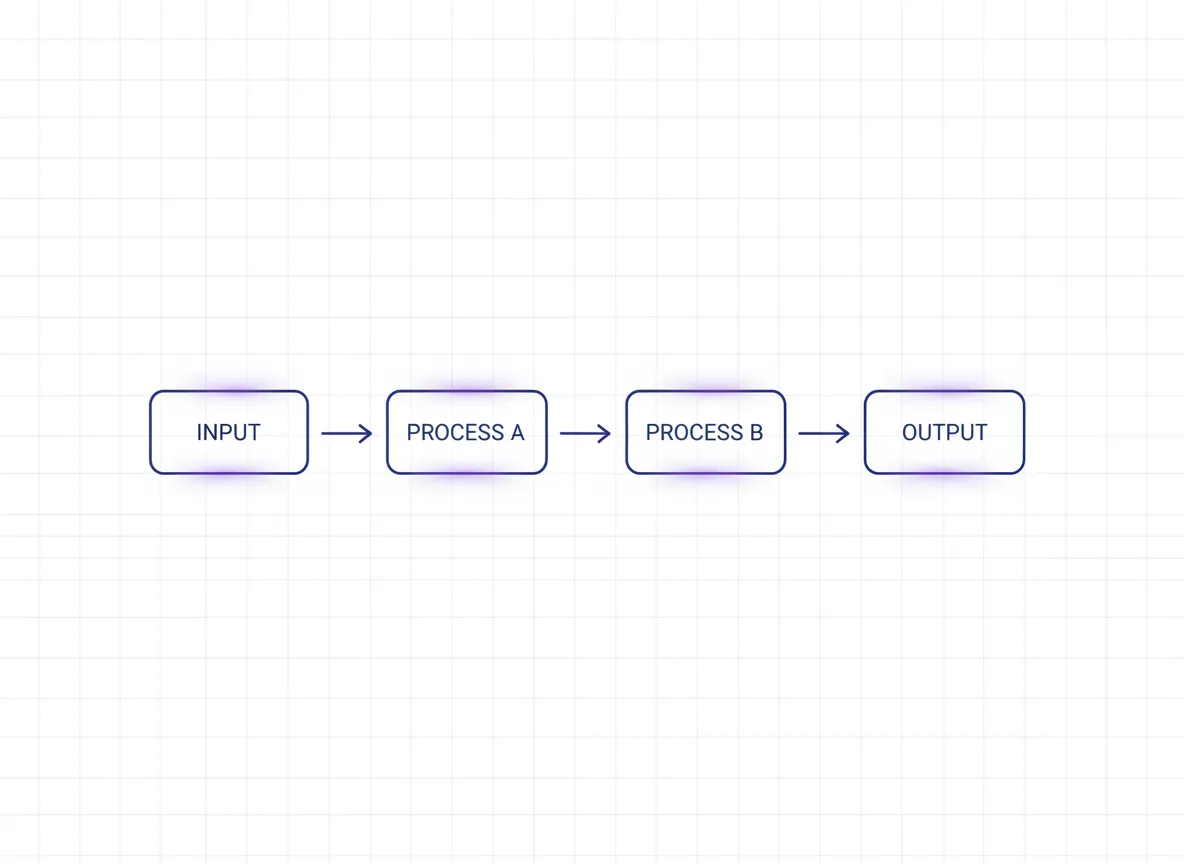
Process Architecture
When most people hear “process,” they think paperwork, red tape, and bureaucracy.
You’ll see how a good process approach actually makes work easier, faster, and more consistent, without turning your business into a rule-bound machine.
The key idea: process isn’t one thing.
In growing businesses, three related concepts get blended together. This book helps you separate them clearly, so you can build the right structure without overcomplicating the work.
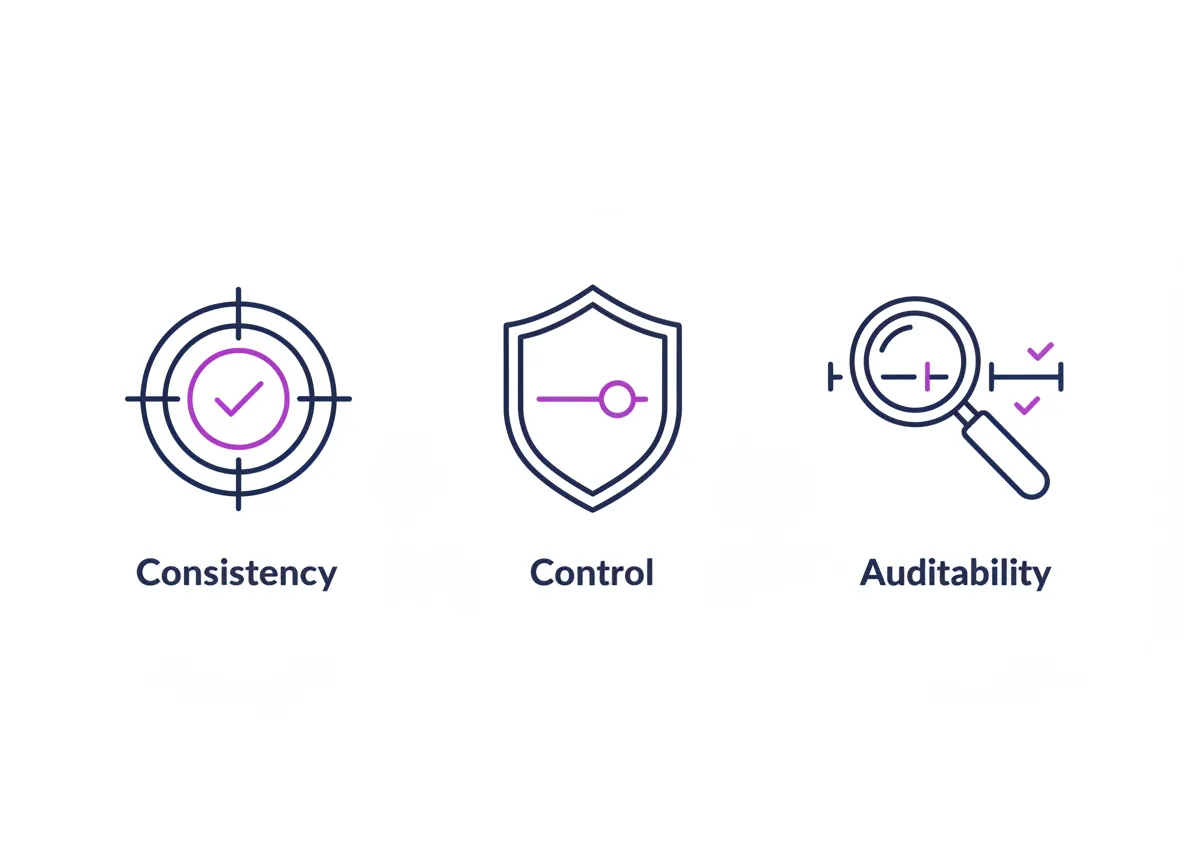
Consistency + Control + Auditability
As your business grows, the challenge isn’t just doing more work. It’s doing the work the same way, to the same standard, every time.
Consistency: customers get a reliable outcome (without forcing robotic behaviour)
Control: you can manage risk and quality without micromanaging
Auditability: you can prove what happened, when, and why… without creating a paperwork monster
You’ll also reframe consistency the right way: predictable customer outcomes, not rigid “everyone must do it exactly the same” behaviour.